
Interior design is a highly visual and trust-based business. Before choosing a designer, potential clients often want to see previous projects, understand the designer’s style, compare services, read reviews, and learn how the design process works. This makes a strong digital presence an important part of how an interior design business can present itself to potential clients.
Digital marketing for interior design can bring together several channels, including SEO, social media, paid advertising, websites, content marketing, and local search. These channels can help designers showcase their work, reach relevant audiences, generate enquiries, and communicate with potential clients throughout their decision-making process. Current industry discussions also emphasize portfolio-led websites, local search, social content, and targeted advertising as relevant digital channels for interior designers.
For interior designers preparing for 2027, the focus should not simply be on being visible online. The goal is to create a digital presence that represents the quality of their work, reaches the right audience, provides useful information, and makes it easy for interested clients to get in touch.
Increased Online Visibility and Brand Awareness
One of the main benefits of digital marketing for interior designers is the opportunity to make the business easier to discover online. Potential clients may search for an interior designer through Google, explore design ideas on social media, or discover a studio through online recommendations and advertisements.
A consistent digital presence can help designers appear across multiple customer touchpoints. A website can present detailed project information, while social media can showcase completed spaces, design ideas, and behind-the-scenes content. Search visibility can help people discover the business when they are actively looking for interior design services.
Brand awareness is also about creating a recognizable identity. Consistent visual design, messaging, project photography, and communication across the website and social platforms can help an interior design business present a more organized and professional image.
The objective is not simply to reach more people, but to become visible to people who may actually be interested in the type of interior design services the business provides.
Reach the Right Potential Clients
Digital marketing allows interior designers to communicate with more specific audiences instead of relying only on broad advertising. The right audience can vary depending on the designer’s services, project type, location, and preferred client profile.
For example, a designer may focus on:
- Residential homeowners
- New homeowners
- Apartment owners
- Villa owners
- Office and commercial businesses
- Property developers
- Restaurant or retail businesses
- Clients looking for specific design styles
Paid advertising platforms can use factors such as location, interests, demographics, and campaign objectives to reach selected audiences. SEO can also help connect a designer with people actively searching for services such as residential interior design, office interior design, or interior designers in a particular city.
Understanding the target audience first is important. The website content, portfolio, advertisements, and social media communication should reflect the needs and expectations of the clients the designer actually wants to attract.
Showcase Your Interior Design Portfolio Online
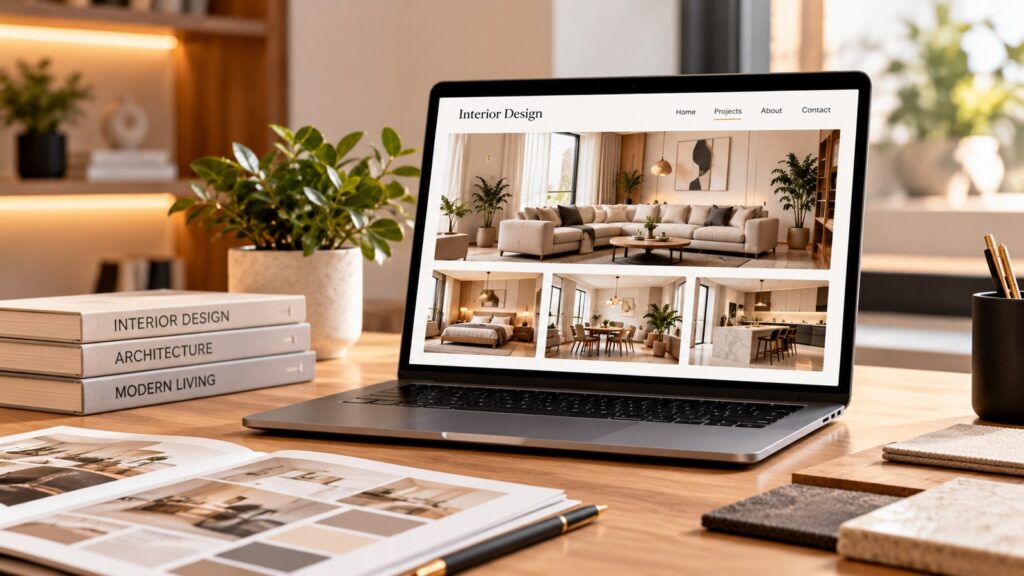
An interior designer’s portfolio is one of the most important parts of their online presence. Potential clients want to see the designer’s previous work and understand the quality, style, and type of projects they handle.
A portfolio website can organize projects into useful categories such as:
- Living room interiors
- Bedroom interiors
- Kitchen design
- Full-home interiors
- Office interiors
- Commercial spaces
- Residential projects
- Before-and-after transformations
Each project can include relevant images along with information about the design approach, project type, challenges, materials, or other details that help visitors understand the work.
Social media can extend this portfolio by using project walkthroughs, Reels, carousels, before-and-after posts, and behind-the-scenes content. Current interior-design marketing practices commonly emphasize portfolio-led websites and visual social content because the work itself is an important part of the brand’s digital communication.
Save Time and Get Faster Marketing Results
Digital marketing can help interior designers organize and streamline parts of their marketing process. Instead of manually promoting every project through offline channels, businesses can create reusable digital assets such as portfolio pages, social media content, email communication, enquiry forms, and advertising campaigns.
For example, one completed interior project can provide material for a website case study, Instagram posts, a project walkthrough video, a blog article, and advertising creative. This allows businesses to make greater use of the content they already have.
Paid advertising can also provide faster visibility than waiting for organic search growth. However, faster visibility does not automatically mean faster business results. Campaign performance depends on factors such as targeting, budget, creative quality, landing-page experience, competition, and the quality of the enquiries generated.
SEO generally requires a longer-term approach, while paid advertising can provide more immediate exposure. Using both according to the business’s objectives can create a more balanced marketing approach.
Generate Qualified Leads and Increase Conversions
For an interior design business, getting website visitors or social media followers is not enough. The ultimate objective may be to generate relevant project enquiries, consultations, site visits, or other meaningful actions.
A digital marketing strategy can create different paths for potential clients to make contact. These can include:
- Website enquiry forms
- Phone calls
- WhatsApp enquiries
- Consultation requests
- Social media messages
- Google Business Profile interactions
- Landing-page forms
The quality of the enquiry also matters. A designer looking for residential projects in a particular budget range may not benefit from a large number of unrelated enquiries. Clear service pages, project information, location details, and enquiry forms can help potential clients understand whether the designer is suitable for their requirements.
Digital marketing should therefore be connected to the complete customer journey — from discovering the designer to reviewing the portfolio, understanding the services, building trust, and finally making an enquiry.
Improve Marketing ROI
Marketing ROI refers to understanding the value generated from marketing activity compared with the resources invested. Digital channels can provide data that helps interior designers evaluate where their marketing efforts are producing useful outcomes.
For example, businesses can monitor:
- Website traffic
- Organic search visits
- Advertisement clicks
- Cost per enquiry
- Social media engagement
- Form submissions
- Phone calls
- WhatsApp enquiries
- Consultation requests
- Online bookings, where applicable
This information can help a business identify which channels deserve more attention and which activities may need improvement.
ROI should not be judged only by likes, impressions, or follower growth. For an interior designer, a smaller number of relevant enquiries may be more valuable than a large amount of general engagement. The right measurement approach depends on the business model, project value, marketing objectives, and sales process.
Engage With Potential Clients Through Social Media
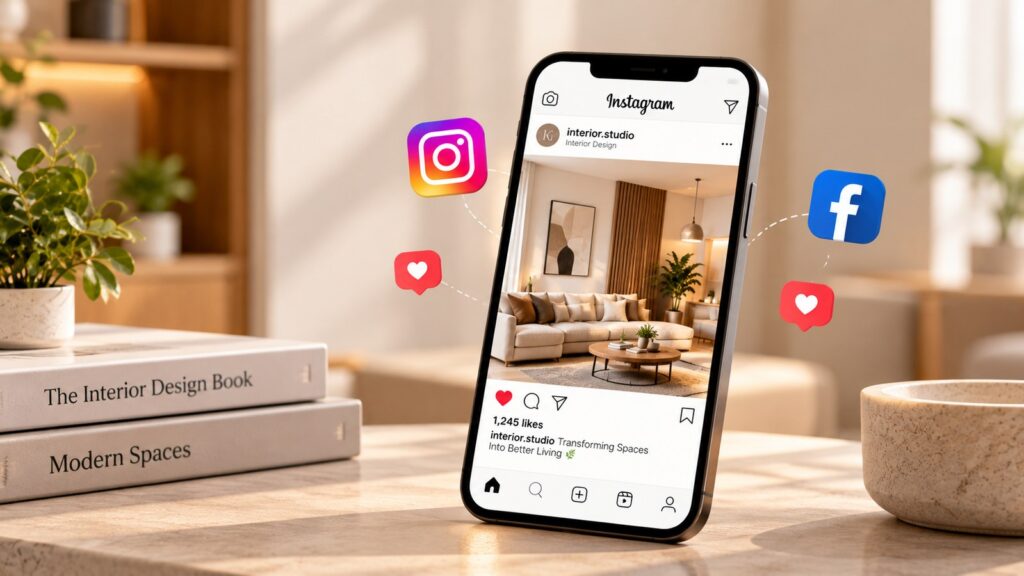
Social media provides interior designers with a way to communicate their design work regularly and maintain visibility among potential clients. Platforms such as Instagram, Facebook, Pinterest, and YouTube can be useful for different types of visual content. Social media marketing for interior designers can help showcase their creativity, promote their services, and connect with potential clients.
Interior designers can share:
Completed projects
Before-and-after transformations
Design tips
Material selection
Colour combinations
Space-planning ideas
Project walkthroughs
Behind-the-scenes content
Client-approved testimonials
Design trends and inspiration
Social media can also help potential clients understand how a designer thinks, not just what their finished projects look like. Showing the design process, material choices, mood boards, site visits, or project development can provide additional context about the designer’s approach.
The focus should not be on posting simply to remain active. Content should have a purpose, whether that is educating the audience, showcasing expertise, presenting projects, answering questions, or encouraging relevant enquiries.
Build Trust and Credibility Online
Interior design projects can involve significant budgets, personal spaces, and long decision-making periods. Potential clients therefore often want evidence that a designer is reliable and capable before making contact.
Digital marketing can support trust by making important information easily available. A designer can show previous projects, explain services, provide clear contact information, display genuine customer reviews, and answer common questions through their website and content.
Trust-building content can include:
- Genuine project photographs
- Client testimonials
- Project case studies
- Design process explanations
- Frequently asked questions
- Designer or studio information
- Clear service descriptions
- Genuine reviews and responses
Online reviews can also provide social proof, particularly for local interior designers. Current local interior-design marketing guidance emphasizes accurate business profiles, project photographs, and genuine reviews as useful parts of local online visibility.
Designers should avoid fake reviews, unsupported claims, or exaggerated statements. Trust is stronger when the online presence accurately represents the business and its work.
Target Local Customers Through Digital Marketing
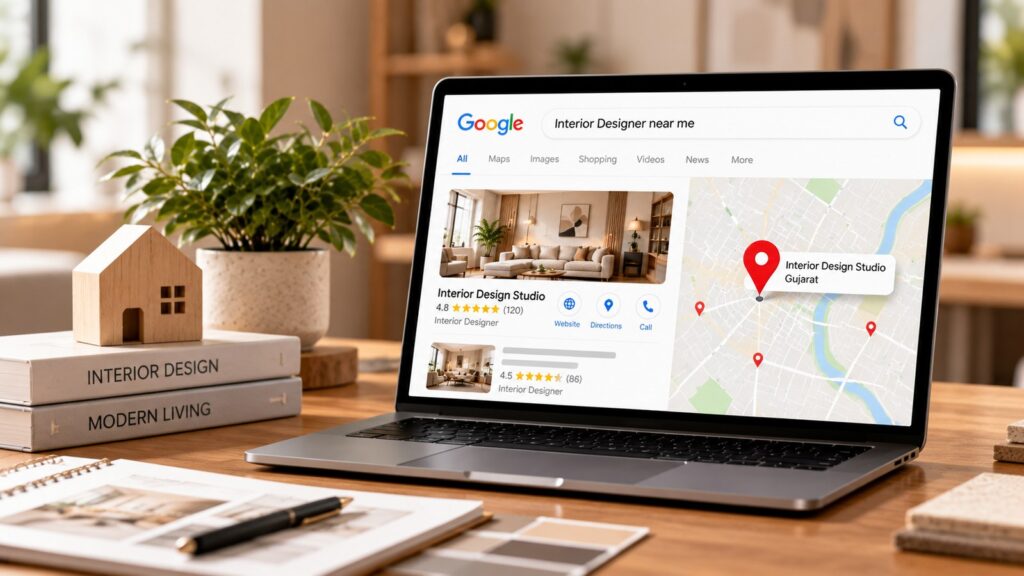
Interior design is often a location-dependent service because designers may need to visit properties, understand local requirements, coordinate with suppliers, and work within specific service areas. This makes local digital marketing particularly useful.
An interior designer can target customers in specific cities or areas through:
- Local SEO
- Google Business Profile
- Location-specific website pages
- Google Ads
- Social media campaigns
- Local project content
- Genuine customer reviews
For example, an Ahmedabad-based interior designer may create useful pages around services such as residential interior design, office interiors, modular kitchens, or specific project types in Ahmedabad.
Local search can help connect a business with people who already have a relevant need. However, location pages should provide genuinely useful information rather than simply repeating the city name throughout the content. Current industry guidance also highlights the importance of local search for interior designers because clients often look for designers who can serve their specific city or area.

Gain a Competitive Advantage in the Interior Design Industry
Interior designers often compete not only on design quality but also on how clearly they present their work, services, process, and customer experience. A well-organized digital presence can help a business communicate these differences more effectively.
For example, two designers may have similar portfolios, but one may provide a clearer website, better project information, useful educational content, genuine reviews, and easier enquiry options. These elements can make it simpler for potential clients to evaluate the business.
Digital marketing can also help interior designers compete beyond traditional referrals. Search visibility, social media content, paid campaigns, portfolio websites, and local reviews can create additional ways for potential clients to discover a business.
The goal should not be to copy competitors or simply increase the number of marketing activities. Instead, designers can identify what their target clients need, communicate their own strengths clearly, and create a digital experience that reflects their actual services and design approach.
Conclusion: Building a Strong Digital Presence for Interior Designers
For interior designers, digital marketing can support different parts of the customer journey — from discovering a design studio to exploring its portfolio, understanding its services, building trust, and making an enquiry.
Online marketing for interior design can include SEO, social media marketing, Google Ads, portfolio websites, content marketing, local search, and other digital channels. Each channel can serve a different purpose, so businesses should select their marketing activities based on their audience, location, services, project type, and business objectives.
As interior design businesses prepare for 2027, the focus should be on creating a digital presence that is visually strong but also useful, searchable, trustworthy, and easy for potential clients to navigate. Consistent improvement, meaningful performance tracking, and a clear understanding of the target audience can help businesses make better use of their digital marketing efforts.
Ready to Grow Your Interior Design Business Online?
At Khushi Growth, we provide digital marketing solutions including SEO, Google Ads, Social Media Marketing, Website Development, E-Commerce, and Graphic Design. We create practical strategies based on your business requirements, target audience, location, and marketing goals to help build a stronger online presence.
Digital marketing can help interior designers improve online visibility, showcase their portfolio, reach potential clients, build credibility, and communicate their services online.
Interior designers can use SEO, social media, websites, content marketing, Google Ads, and other digital channels to reach people researching interior design services.
A portfolio allows potential clients to see previous design work, understand the designer’s style, and explore the types of projects and services offered.
Social media allows interior designers to showcase completed projects, design ideas, before-and-after transformations, videos, and other visual content.
Yes. Local SEO, location-focused content, Google Business Profile, social media, and locally targeted advertising can help designers reach potential clients in relevant areas.
A professional website, useful content, portfolio, customer reviews, consistent branding, and clear service information can help potential clients understand the business before making an enquiry.
A website can provide a central place to showcase projects, explain services, provide contact information, and help potential clients understand the designer’s work.
Interior designers can use SEO, social media marketing, Google Ads, content marketing, website development, email or messaging channels, and other suitable digital platforms based on their goals.